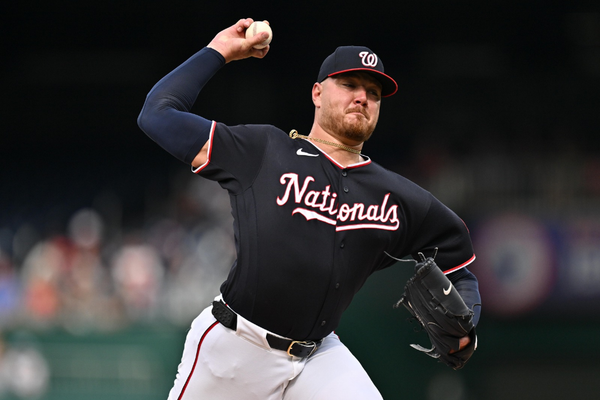
Dustin May Didn’t Need a New Pitch—He Changed the Menu
Against a lefty-heavy Pirates lineup, May turned his cutter into both a count-control pitch and a finishing weapon.


Dustin May arrived in Milwaukee with championship experience and a winding recent résumé. The former Dodgers top prospect debuted in 2019, went 3–1 with a 2.57 ERA in 2020, earned Baseball America All-Rookie honors, and made seven postseason appearances for Los Angeles’ World Series champions.
After the Dodgers traded him to Boston in July 2025, May signed with St. Louis that winter. Milwaukee acquired him and left-hander JoJo Romero on August 3, 2026, sending outfield prospects Alexander Frias and Josiah Ragsdale to the Cardinals. Three days later, May made his Brewers debut against Pittsburgh—and showed that his biggest adjustment wasn’t a new pitch, but a new menu.
Weapon Check
Against the Pirates, Dustin May’s most important adjustment wasn’t a new pitch shape, added velocity, or a dramatic movement change. It was much simpler: he leaned into the pitch that best fit the matchup.
May threw 97 pitches, and 86 of them came against left-handed hitters. In that lefty-heavy environment, his cutter became the foundation of the game plan. He threw it 34 times—a 35% usage rate, up from his 23% season average. No other pitch appeared more often.
The results explain why.
May’s cutter produced 15 called strikes and whiffs, accounting for more than half of his 29 total. It generated five whiffs on 17 swings for a 29% whiff rate and finished with an excellent 44% CSW rate. Two of May’s five strikeouts also came on the cutter.
But its value went beyond finishing hitters. The cutter helped May control counts from the beginning. He put it in the zone 68% of the time and earned a strike on 79% of the cutters he threw. He also recorded a first-pitch strike with it in five of six opportunities. By comparison, his four-seamer started a hitter with a strike only once in seven tries.
The cutter was both his steering wheel and his finishing weapon.
Seam Study
May arranged the rest of his repertoire around it. Against lefties, he used 36% cutters, 24% four-seamers, 14% sweepers, 12% changeups, 9% curveballs, and just 5% sinkers.
His sinker usage jumped to 55% against righties, but that came in a tiny 11-pitch sample. With Pittsburgh presenting so many left-handed matchups, May reduced his usual sinker and sweeper exposure and allowed the cutter to lead.
The pitch itself wasn’t dramatically different. It averaged 93.2 mph, nearly identical to his 93.4 season mark, while matching his normal movement profile: nine inches of induced vertical break and one inch of horizontal break.
In fact, all six of May’s pitches had slightly lower spin than their season averages, yet every movement reading remained within two inches of normal.
This wasn’t an arsenal transformation. It was an arsenal deployment lesson.
There is one detail worth watching: May’s velocity softened later in the outing. His four-seamer moved from 97.3 mph in the first inning to 95.7 in the sixth, while the cutter went from 94.1 to 92.7. The inning samples are small, so that is an observation—not an alarm.
The biggest takeaway is simple: pitching isn’t only about possessing great stuff. It’s about identifying which weapon a matchup demands and trusting it enough to shape the entire outing.
May didn’t reinvent his arsenal against Pittsburgh. He simply chose the right pitch to lead it.
Disclosure: All data used in this article was sourced from Baseball Savant.